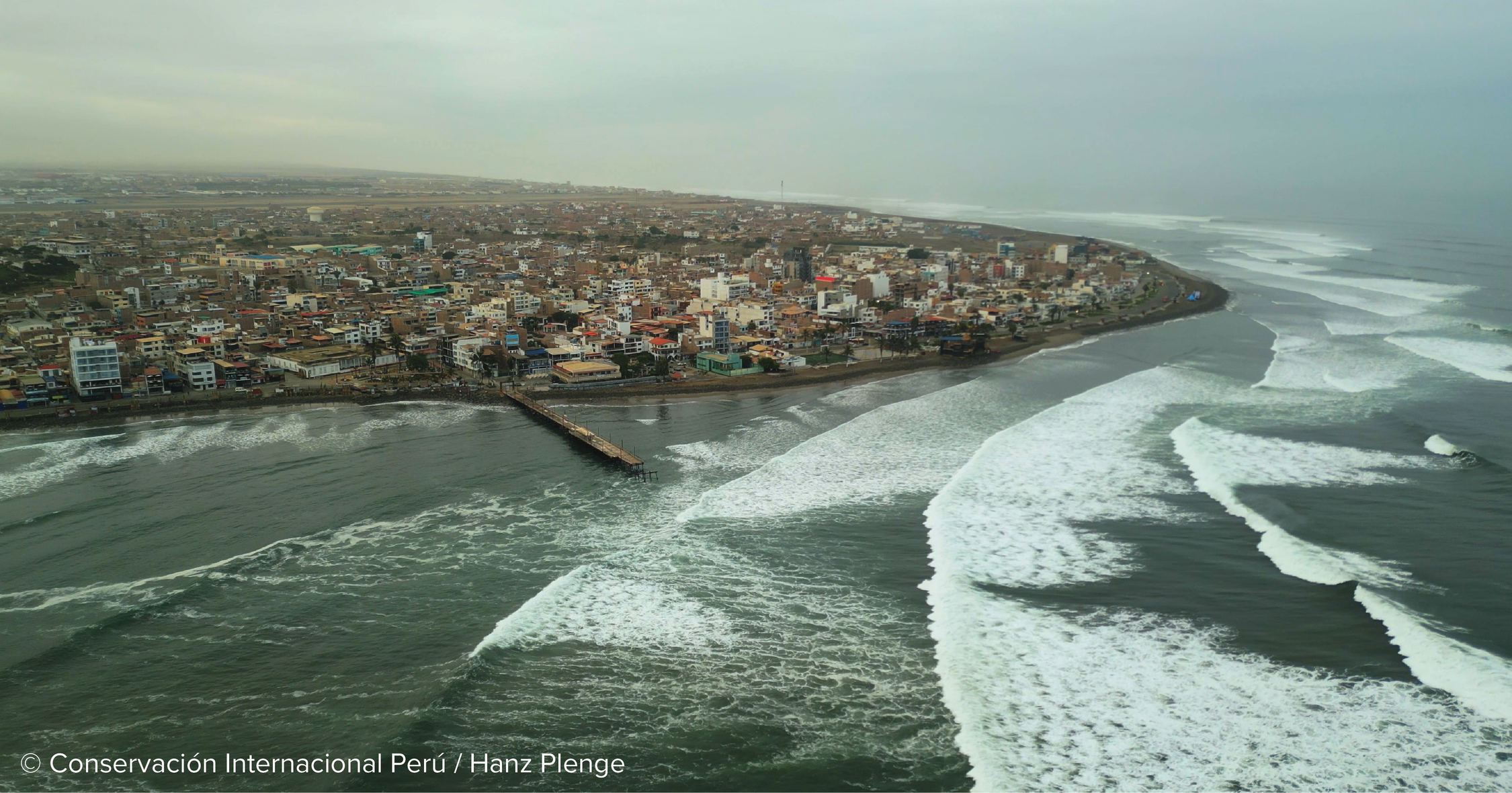
On the beaches of Huanchaco, the classic image has always been that of fishermen braving the waves on their traditional totora reed boats. But inland, life by the sea follows a different rhythm. The women of this community—fishermen’s wives, mothers, and pillars of the household—are the ones who handle the daily work of filleting fish, selling it at local markets, running small beachside restaurants, or making handicrafts when the sea gets rough and the catch is scarce. For a long time, this tireless effort was viewed simply as helping out the family, obscuring its true value to the coastal economy. Today, this story is changing.
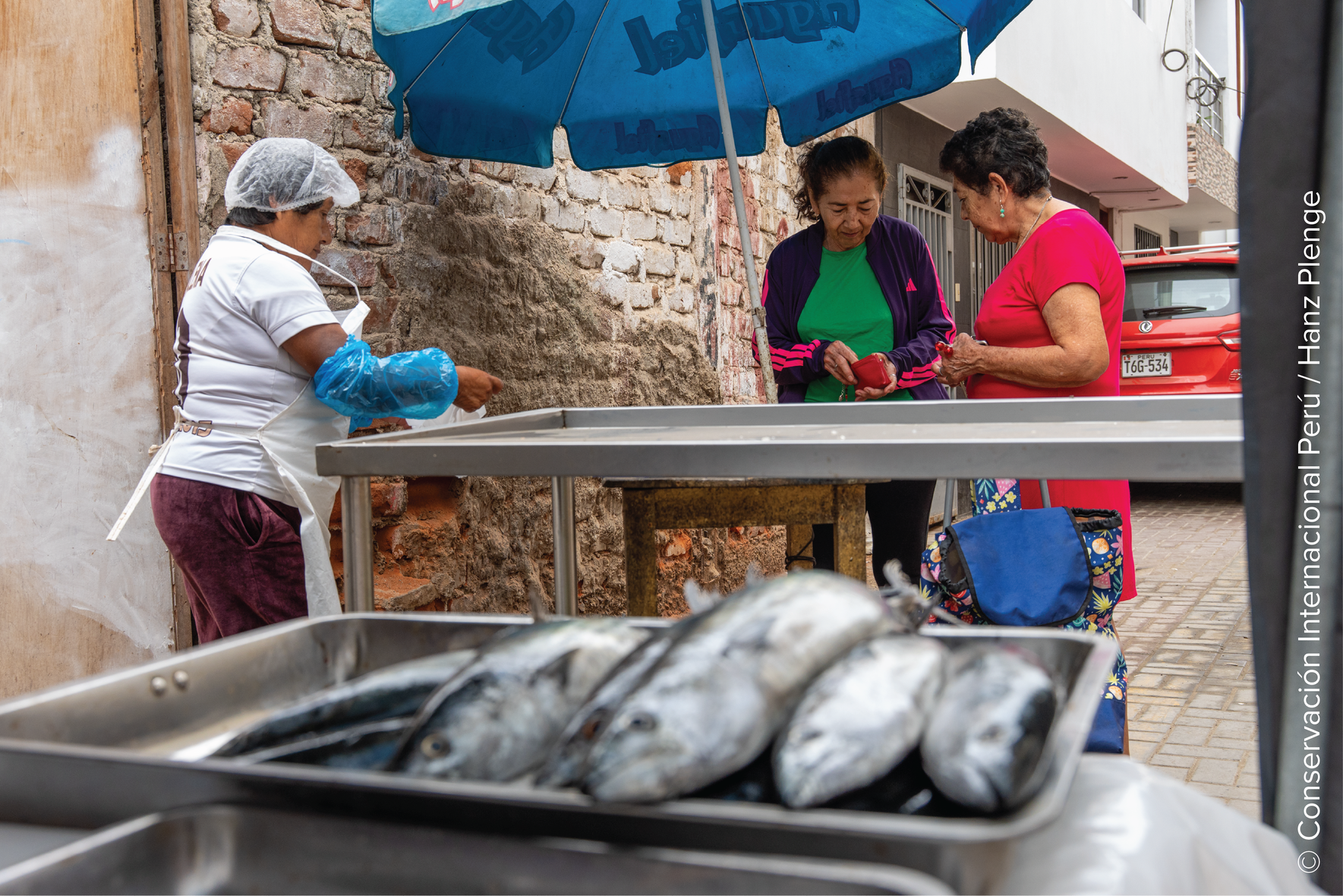
Through an initiative led by Conservation International Peru, 10 women leaders from Huanchaco decided to take a step forward to transform their reality, moving beyond seeing themselves merely as supporting figures to begin recognizing themselves as true entrepreneurs. Together with the Ministry of Production (PRODUCE) and its national “Your Business” program, they learned to develop their own business plans, track their income and expenses, and calculate their actual costs. This training provided them with technical tools, but above all, it gave them the confidence to take control of their finances. As one of them shares:
Now, thanks to the courses, I’m taking control of my earnings, and I feel great because I’m bringing more income home”
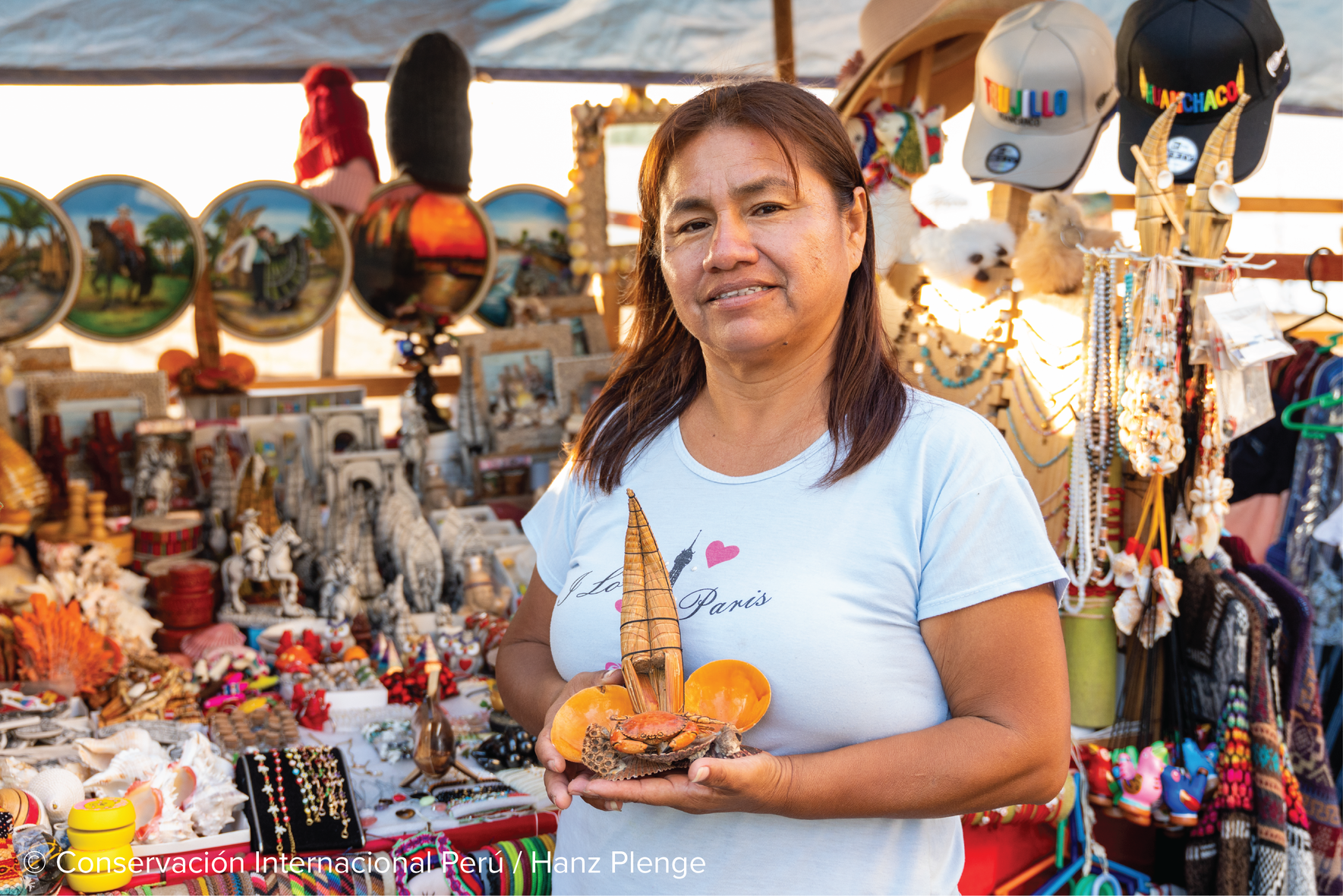
The efforts to strengthen their businesses included workshops on Good Handling Practices (GHP) for hydrobiological products, resulting in half of them obtaining health certificates, in addition to receiving technical working capital in the form of protective gear such as gloves, knives, cutting boards, stainless steel tables, coolers, and cleaning supplies. With the support of the Piura Fisheries Training Center (CITE Pesquero Piura), they learned techniques for cutting, smoking, dry-curing, vacuum-packing, and making artisanal burgers and nuggets, combining these skills with weaving using totora and reed fibers during the off-season. Additionally, the program conducted a direct business intervention at a local restaurant, redesigning its menu, optimizing the kitchen, and providing customer service training. Reflecting on this comprehensive training, Flor Urcia Siche notes:
We’ve learned how to manage inventory and develop new utilitarian products made from totora reeds, which I’m sure will boost our sales, especially during the summer months when we have more visitors.”
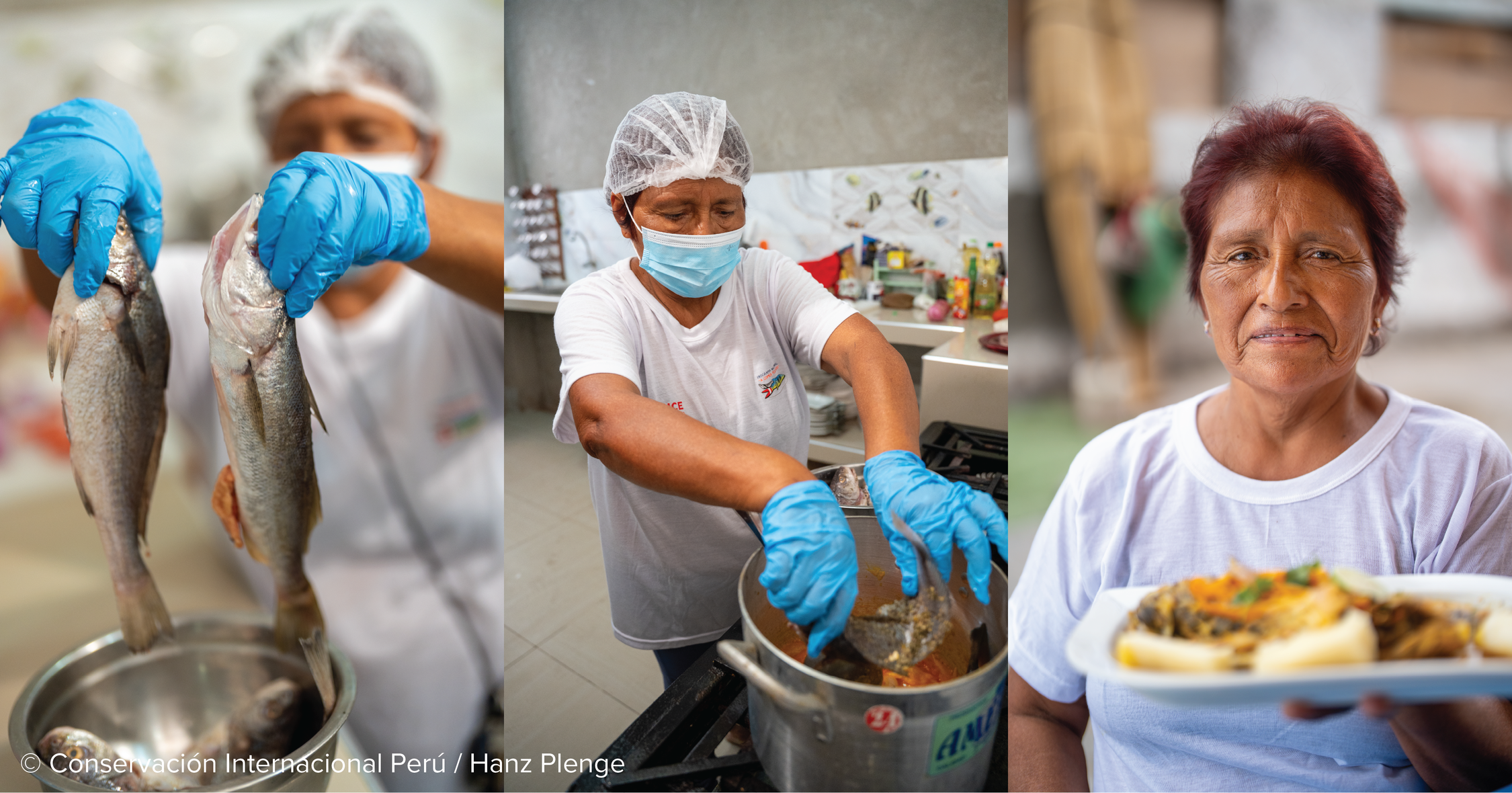
Today, the participants are preparing to take the next business step as official suppliers for the traveling fairs of the Ministry of Production’s “National Eat Fish Program.” Beyond the numbers, these women are building a network of mutual support where trust and pride in their work are the true driving force behind the blue economy in their community. Rosa Briceño sums it up with enthusiasm:
We’re making progress, moving forward, and learning new things. Now we know that it’s not just husbands who can contribute to the economy. We can, too. Forming an association among us women will help us better negotiate the sale of our fish, shellfish, and woven goods.”
To ensure the long-term sustainability of this impact, the goal is not only to increase competitiveness in restaurants and traveling markets but also to diversify their sources of income while preserving their culture—something evident in the creation of the traditional cookbook they’ve put together themselves to preserve Huanchaco’s culinary heritage.
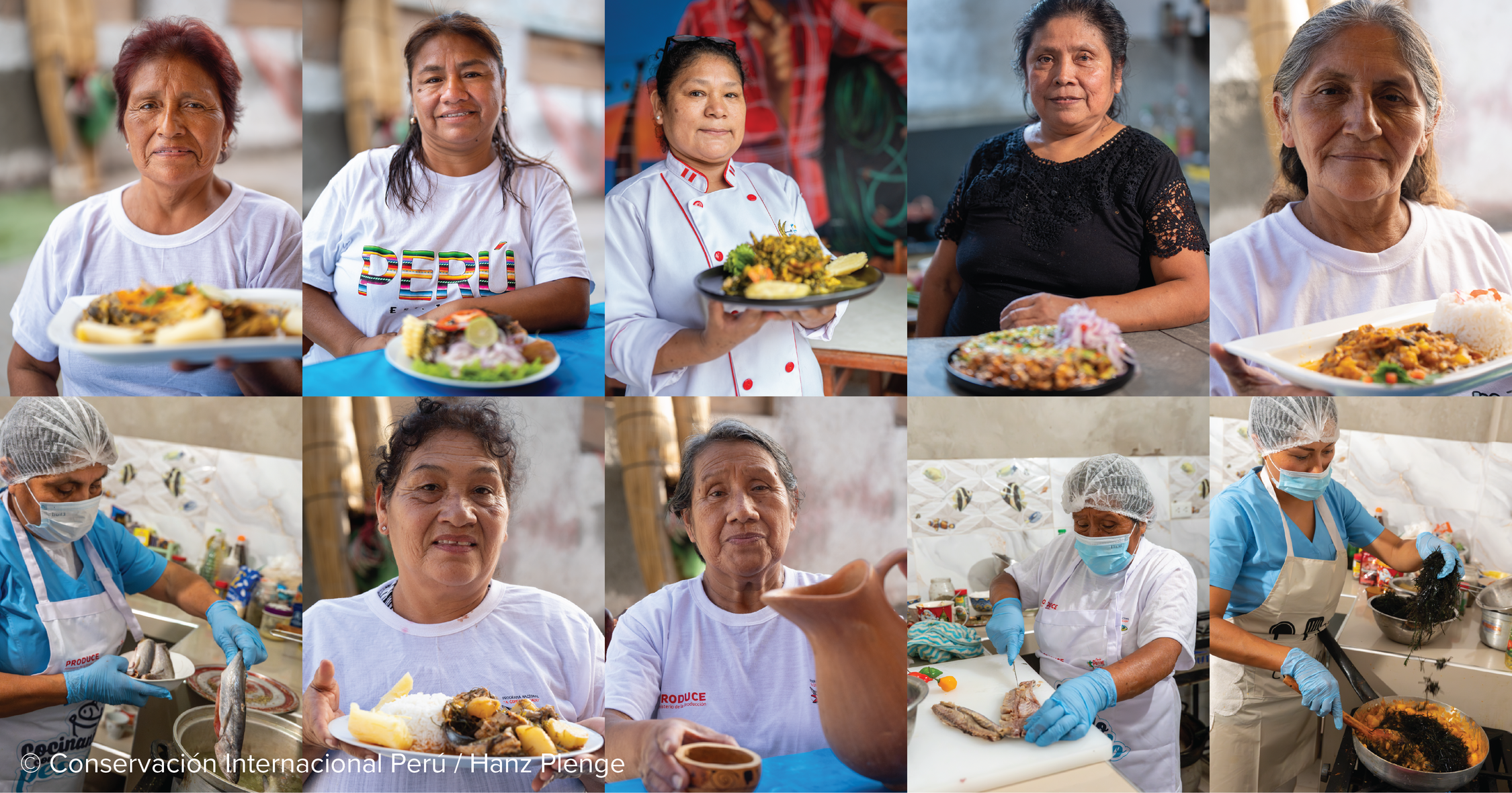
Cynthia Céspedes, who manages Conservation International Peru’s oceans program, reminds us that these women’s efforts to make these spaces a reality are enormous given the heavy workload they handle, but she highlights their great commitment:
They arrived very shy, and today they have gone on to confidently lead their own association, seeking to improve their incomes and establish themselves as key players in the blue economy within the local ecosystem.”
This initiative is part of the project “Expanding the Benefits of the Blue Economy and the Conservation of Critical Biodiversity and Ecosystem Services through the Management of Surfing Ecosystems.” It is funded by the Global Environment Facility (GEF), implemented by UNIDO, and executed by Conservation International in partnership with Save the Waves and SPDA, in coordination with the governments of Costa Rica, Panama, and Peru.