In the city of Rioja, Jhon Elí Vargas reviews his college notes while the sound of traffic seeps in through the window. He is far from the countryside where he grew up, far from the damp trails of the Alto Mayo Protected Forest (AMPF) and the family farm. Yet, the forest continues to set the rhythm of his days. Through constant calls and messages, he maintains a permanent connection with his father, Junior Vargas, a farmer and signer of Conservation Agreements—the pillar upon which the conservation of the AMPF rests.
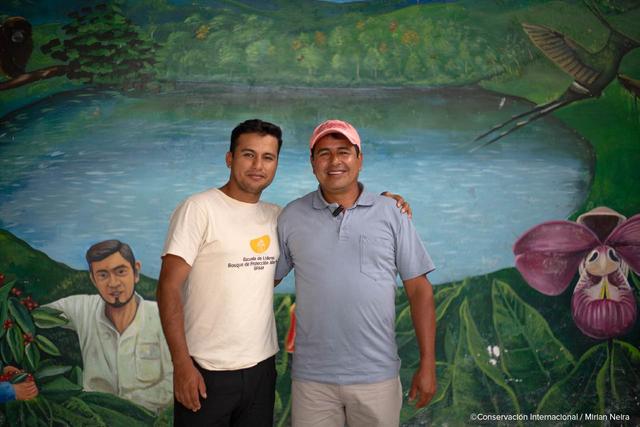
Jhon Elí is a recipient of the Educational Scholarships for Conservation program and an education major at the National University of San Martín, where he is currently in his eighth semester. “I’m very grateful for the support I’m receiving from AMPF, because it allows me to advance in my studies and learn so that I can later share my knowledge with others,” he says. For him, studying is not an individual endeavor, but a way to give back to the region where he grew up.
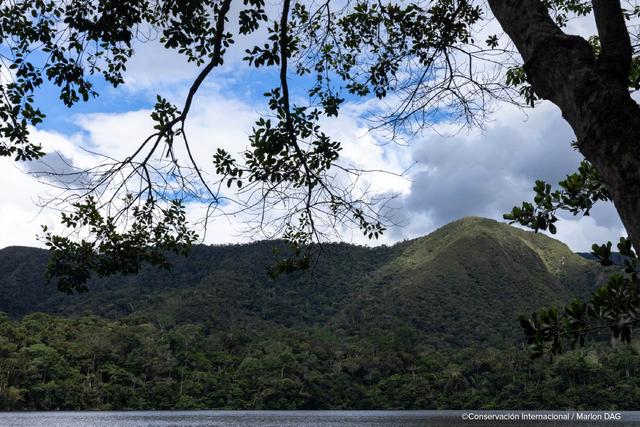
When conservation creates opportunities
Jhon Elí’s story is deeply intertwined with a decision his father made years ago. Junior Vargas signed the Conservation Agreements, committing to protect the forest in exchange for technical assistance and opportunities to improve his family’s quality of life. “I’m grateful I signed the agreements, because otherwise, we would still be clearing the forest,” he reflects. Today, that decision translates into new possibilities for his son.
“I’m proud of him, to see how he continues to pursue his studies,” says Junior. “As a father, I want the best for my son, and with this opportunity of the scholarships and the leadership school, a dream we’ve always wanted is coming true.” While Junior remains dedicated to farming, Jhon Elí is making his way in the city, proving that conservation can also open educational pathways.
The AMPF Leadership School
Throughout this educational journey, the Alto Mayo Protected Forest Leadership School played a key role. The initiative was created to provide the children of Conservation Agreement signatories and scholarship recipients, with a comprehensive focus on environmental protection and the strengthening of youth leadership in San Martín.
The school conducts workshops on forest and biodiversity conservation, climate change and nature-based solutions, land protection, environmental monitoring and control, as well as governance, social management, and cooperativism. Learning doesn’t stop in the classroom: students apply what they’ve learned through awareness-raising workshops in their local communities, towns, and the AMPF buffer zones.
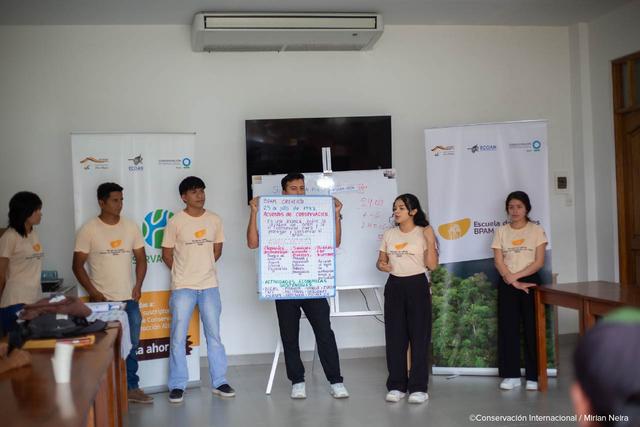
“At the leadership school, we learned that it’s not enough to just know; we need to share with the local community why forest biodiversity is important and what we can do to protect it,” explains Jhon Elí. For him, the forest is essential: “We get water from the AMPF, and the trees capture carbon dioxide. Understanding that changes the way we make decisions.”
Education for Better Decision-Making
For Ivonne Paico, head of the Alto Mayo Protected Forest, the school’s value is strategic. “The AMPF is the first protected area in Peru to provide education opportunities to people who sign Conservation Agreements,” she notes. “People need more educational opportunities to make decisions that will improve their lives. This strengthens governance, improves informed participation, and helps people understand technical terms related to land management.”
From the AMPF management team’s perspective, education was seen as a key tool for long-term sustainability: training young people to engage in dialogue, organize themselves, and lead local conservation efforts.
Along the same lines, Fernando Guerra, from Conservation International Peru, highlights the underlying objective: “To provide new generations in the AMPF insights to natural resources management and strengthen technical, social, and organizational capacities that ensure the sustainability of the protected area.” The School of Leaders was launched by the AMPF management (SERNANP), Conservation International Peru, and ECOAN as a commitment to generational succession in conservation.
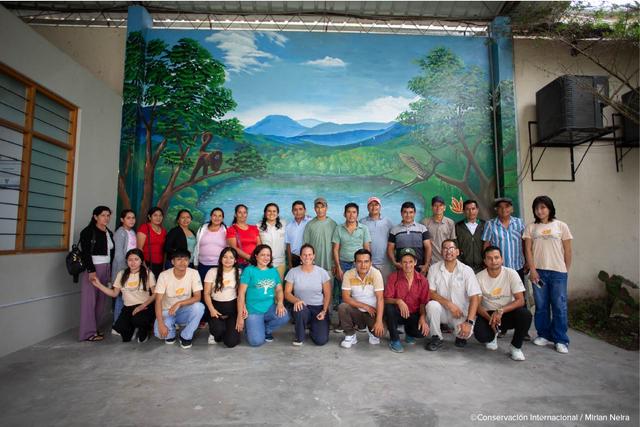
Currently, the Alto Mayo Protected Forest Leadership School is entering a new phase, in which students will engage with various sectors of the Alto Mayo Protected Forest (AMPF) to share, through participatory, educational, and community-based methodologies, the knowledge they have been building over this period. This aims to strengthen the connection between knowledge and the forest management, encouraging young people to become active agents in forest conservation and the well-being of the communities that depend on it.