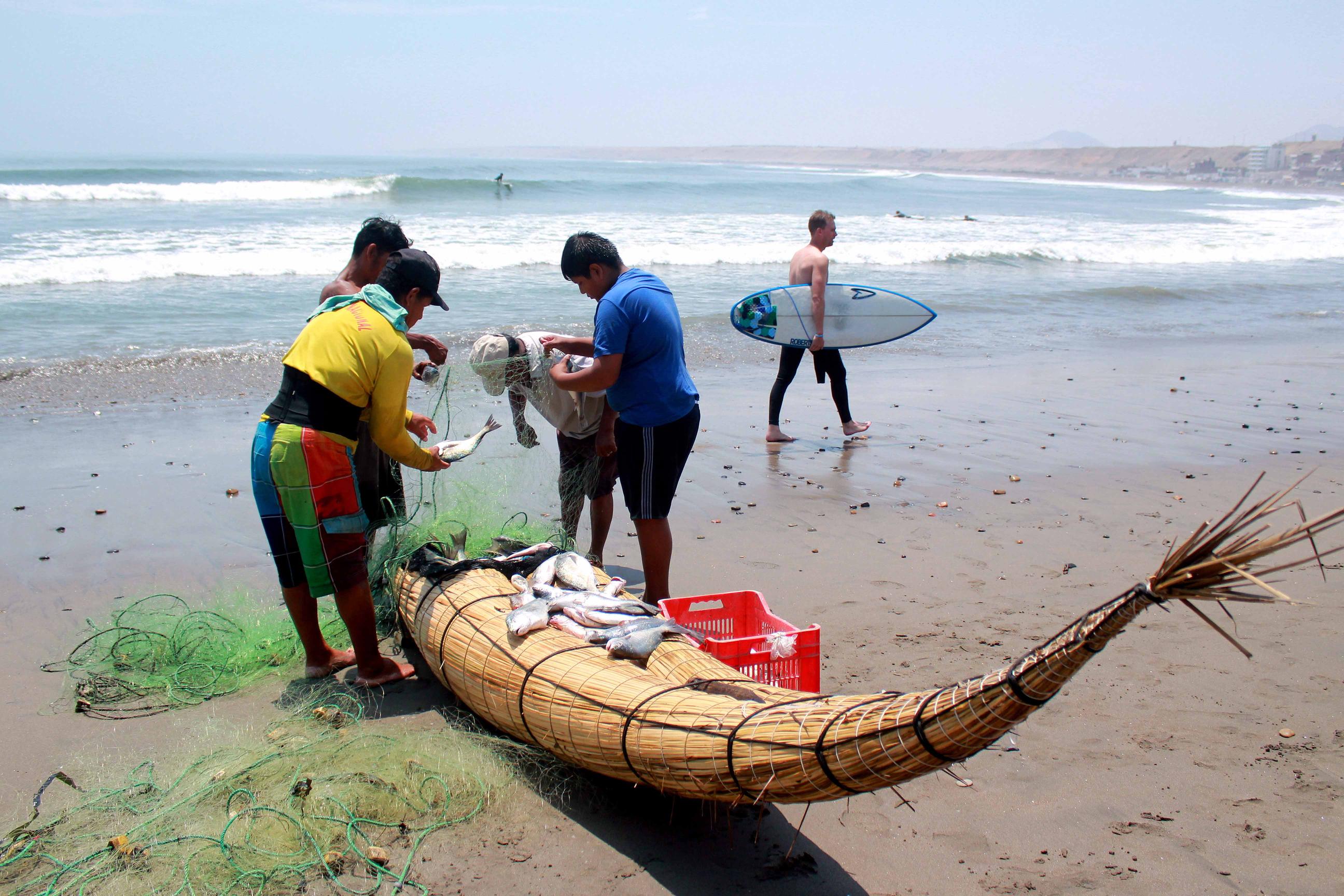
The sea of Huanchaco safeguards a history of more than 3,000 years embodied in its traditional caballito de totora (reed watercraft). Today, this ancestral heritage is being transformed into well-being for Huanchaco Artisanal Fishermen's Association (ASPAH), who have been promoting a experiential tourism pilot program called "TUP-Herederos del Mar" (
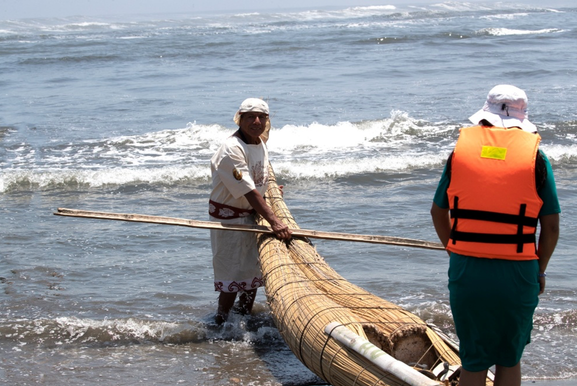
Para el pescador huanchaquero, el caballito de totora es más que una For the Huanchaco fisherman, the caballito de totora is more than just a work tool; it is a symbol of cultural resistance. However, the challenges of modern artisanal fishing require finding sustainable alternatives to improve their income. Taking advantage of the flow of tourists who arrive in Huanchaco to surf, enjoy a ceviche on the beach, or relax at the beach, this experiential tourism initiative was developed under a blue economy approach. Through it, the Association not only generates added value to their daily routines but also showcases a thousand-year-old practice.
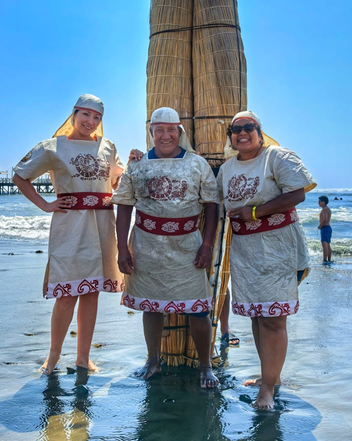
Thus, the fishermen have transformed what used to be an improvised reed boat ride service into a structured experience with an interpretive script that tells the local history. They also wear clothing that highlights Takaynamo, the founder and first ruler of the Chimú Kingdom, adding cultural and historical value to the ride. It is no longer just a simple trip on a reed boat, but a journey back in time, where visitors can hear the history of Huanchaco directly from its protagonists and understand the urgency of protecting the reed beds (totorales) and the ocean.
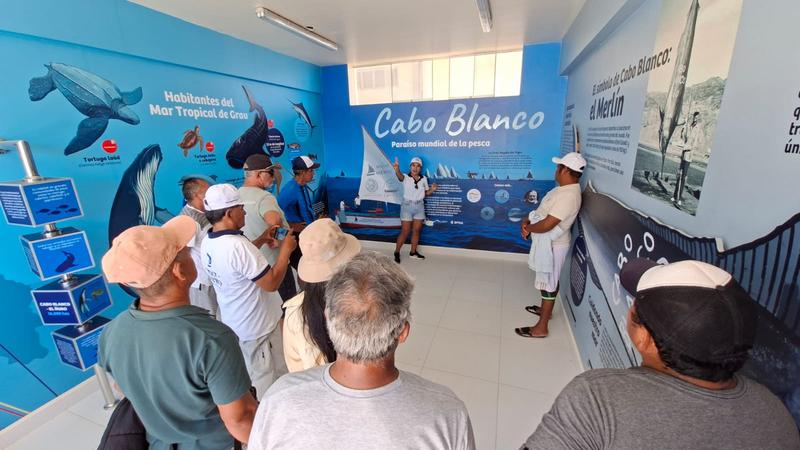
With the creation of an interpretive space and training in cost structure, governance, customer service, and internal organization, the Association has managed to shape and solidify this pilot enterprise. They have successfully monetized the cost of planting, harvesting, and building a caballito de totora. Now, under a new offering, they can optimize their time, receive a fair wage, and reduce the wear and tear on their traditional work vessels; they have completely revalued the effort behind their trade.
A Bridge Between Huanchaco, Cabo Blanco, and El Ñuro
As part of this process, 7 fishermen from the Huanchaco Association participated in an exchange with the ancestral fishermen of Cabo Blanco (Piura), who offer sailing and fishing experiences on their traditional sailboats, as well as with the fishermen of El Ñuro, who offer tourist experiences focused on marine wildlife sighting. Here they were able to see for themselves that it is indeed possible to prosper offering a service that highlights and values identity.
Although they acknowledge that the contexts are different—since Cabo Blanco enjoys a climate with visitors all year round and a bay protected from large swells—the great lesson was seeing the power of community organization. They discovered that, beyond geography, the true engine for moving forward is a united and organized front.
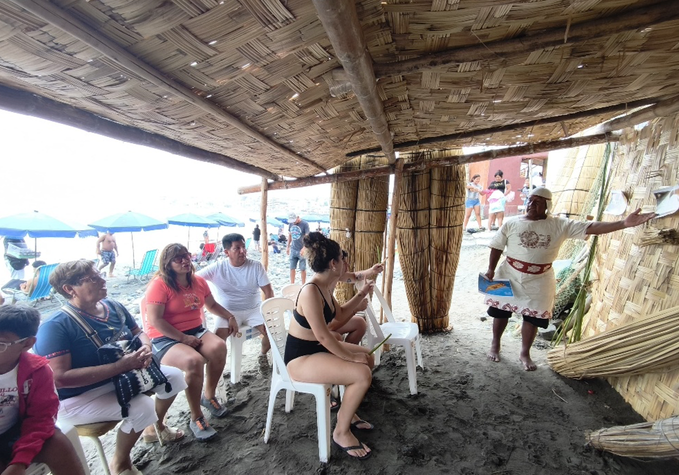
Oswaldo Díaz, president of the Huanchaco Fishermen's Association, reflects the community's sentiment after this encounter: "It has been an excellent experience that has opened up our perspective and given us a vision of what can be achieved. It has helped us generate more commitment among the members to move forward with what we have. We have a lot to offer; we are farmers because we plant and harvest the totora reed, we are also artisans because we build our own caballitos de totora, and on top of that, we are fishermen."
This rebirth of associative commitment demonstrates that blue economy not only protects the ocean; it strengthens the social fabric of communities that, with pride, choose to look to the future whilst holding on to their roots.
This initiative is part of the project "Expanding the benefits of the blue economy and conservation of critical biodiversity and ecosystem services through surf ecosystem management." It is funded by the Global Environment Facility (GEF), implemented by UNIDO, and executed by Conservation International in alliance with Save the Waves and SPDA, in coordination with the governments of Costa Rica, Panama, and Peru.