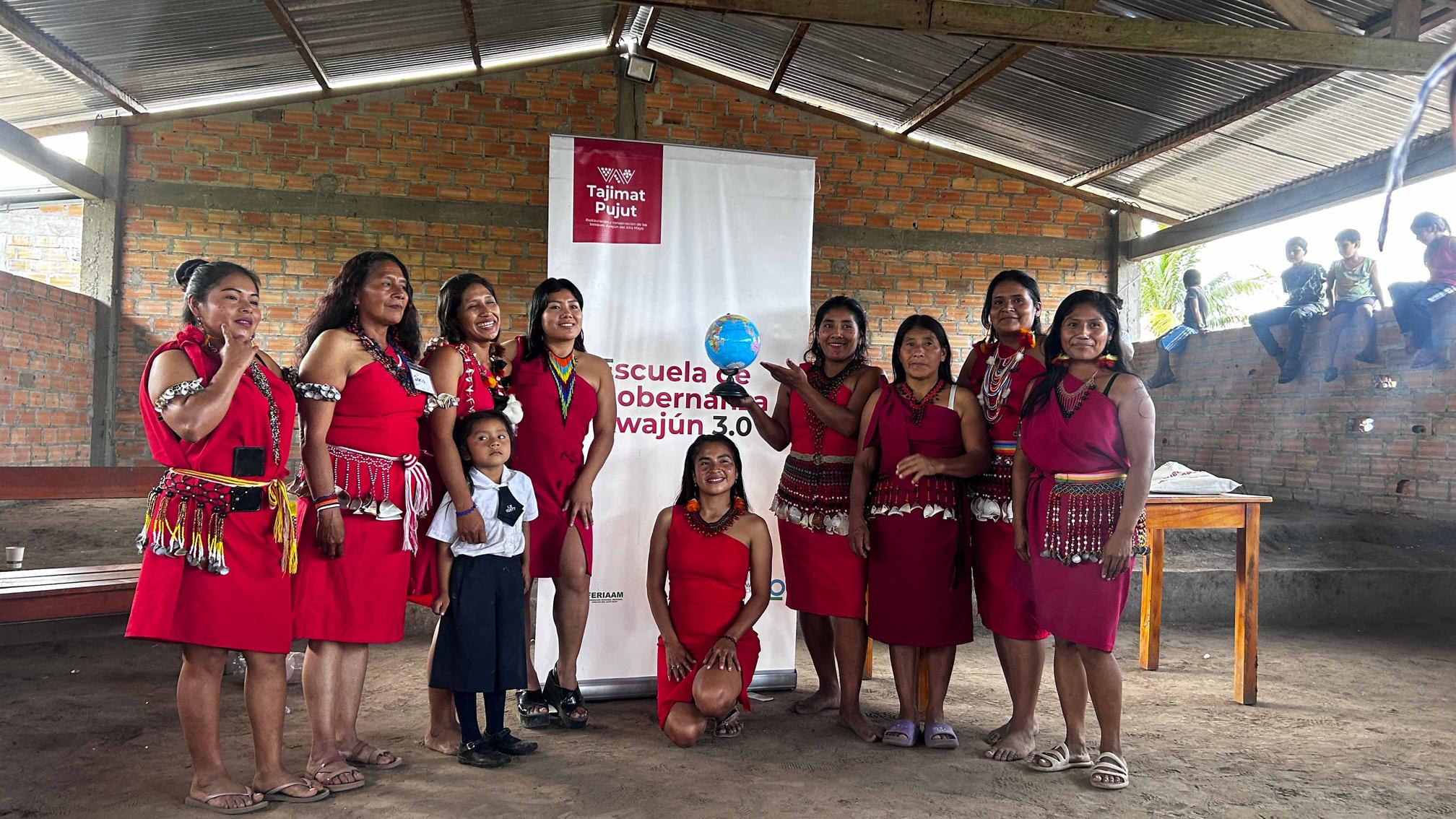
The Awajún Governance School begins its 2026. Aimed towatds female and male leaders of the Awajún indigenous communities of the Alto Mayo, the program seeks to strengthens capacities in politics, indigenous economy, and environmental governance in response to the current challenges of their territory.
The school aims to address deforestation currently impacting their forests due to land leasing and provide tools and knowledge to a new generation of leaders to foster community reflection, autonomous and informed decision-making, and generate capacities for a legitimate, horizontal dialogue with external actors with whom to build their good living.
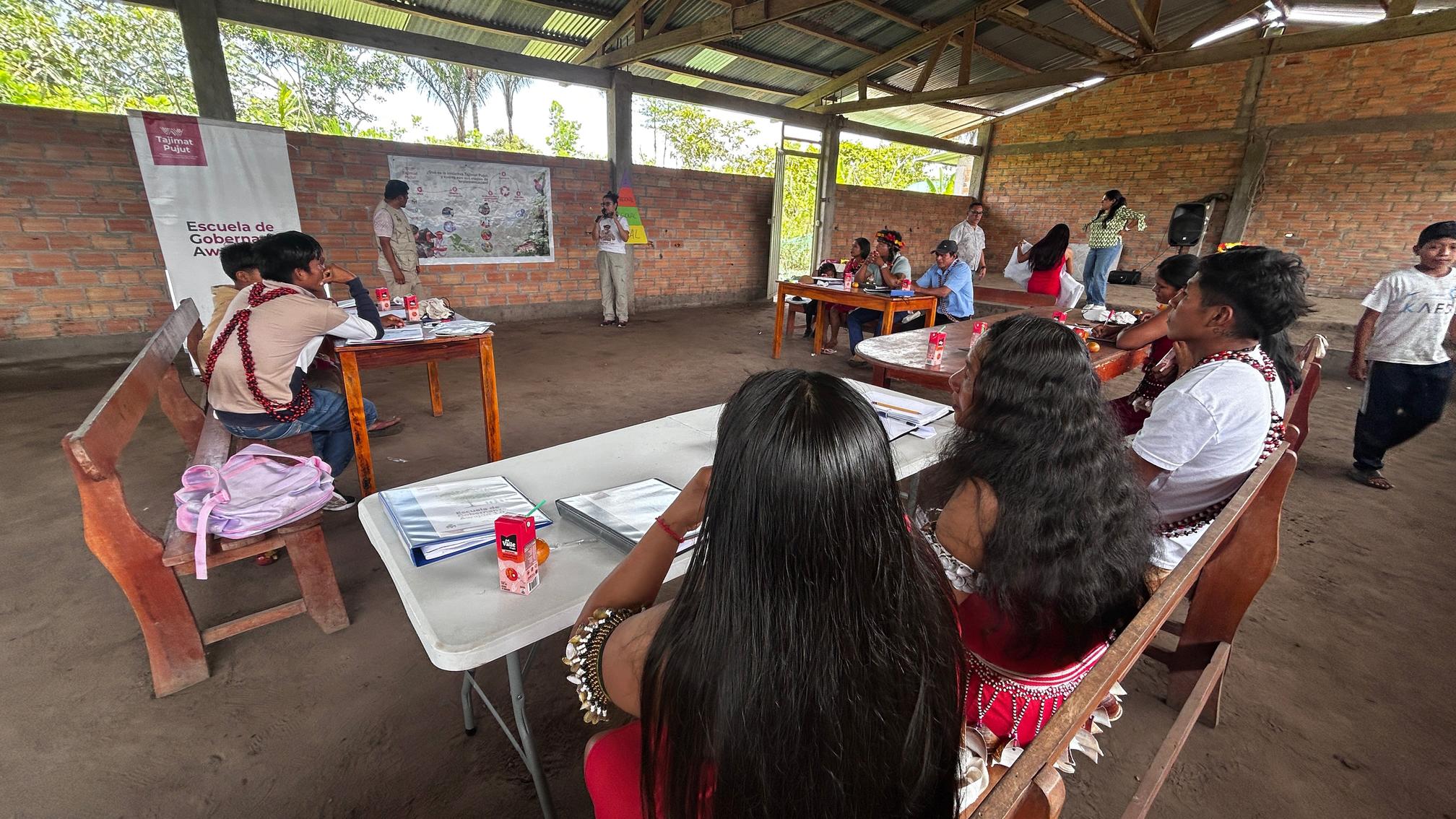
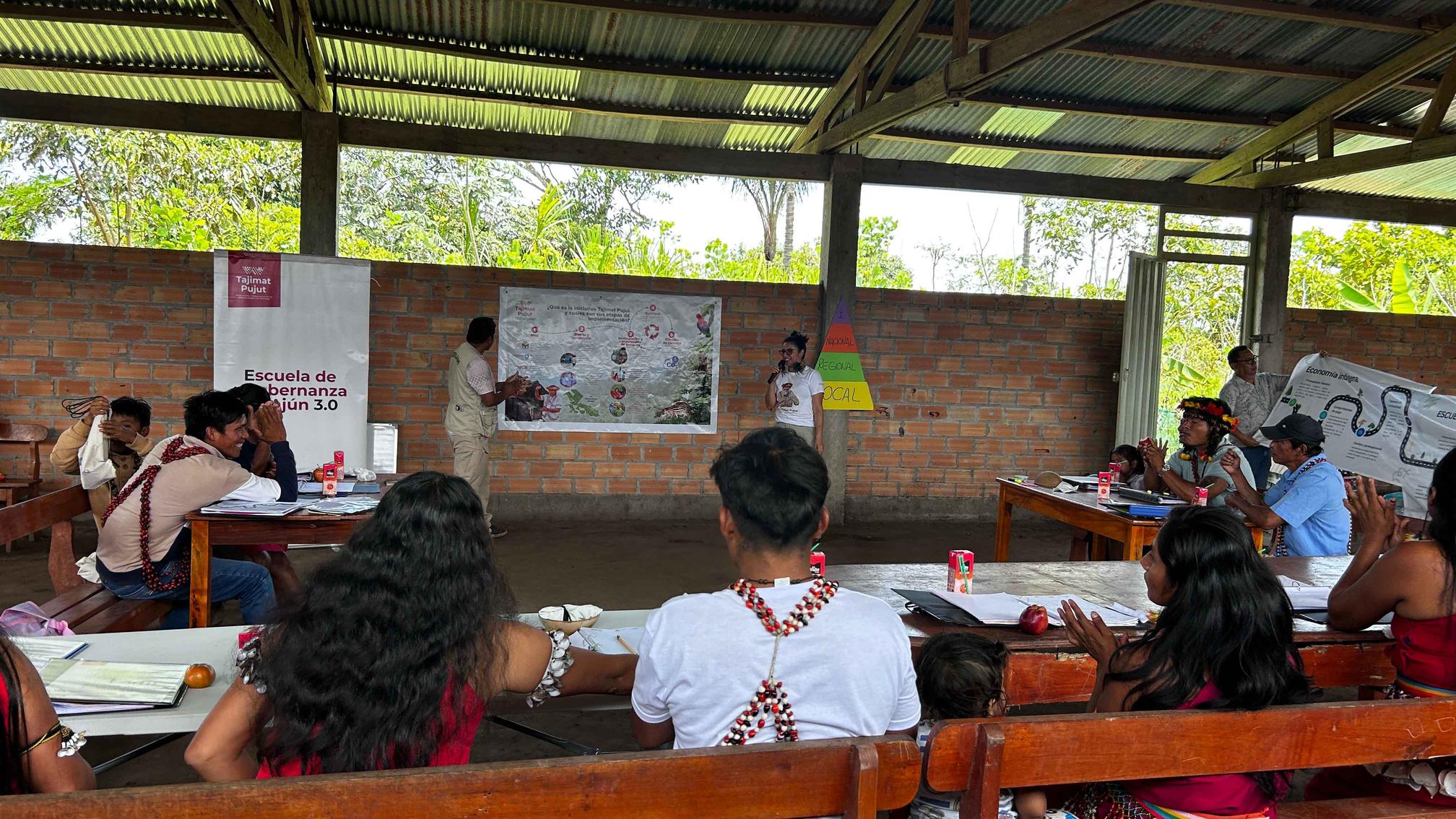
Comprehensive Training with an Intercultural Approach
The Awajún Governance School 2026 is structured around three key learning areas: Politics (identity and leadership); environment; and Indigenous economy. It includes topics such as Awajún indigenous justice, climate change, territory, economic management, and accountability, across 18 training sessions.
"The Governance School changed my life. I didn’t know how to do accounting, not even for my household. But thanks to the school, now I know how. I also know what my rights are within my community, and I also know my duties as a community member," stated Sara Tentets, a graduate of the school from the Shimpiyacu native community. She is one of the 190 indigenous leaders who studied for 8 months to graduate from the School’s first edition in 2021.
The Awajún Governance School is promoted by the Regional Indigenous Awajún Federation of Alto Mayo (FERIAAM) and Conservation International, with technical support from the ICARO Institute. This initiative is part of the "Tajimat Pujut" project (meaning good living in Awajún), which seeks to recover and conserve 231,000 hectares of community forests and contribute to the well-being of Awajún families in the Alto Mayo.
"This type of training is fundamental for the conservation of our forests. Strengthening indigenous governance is the best tool we can give our future leaders to reinforce their role as guardians of our forest conservation. Today, several of them occupy leadership roles in different areas of their communities: associations, boards of directors, vigilance committees, promoters, and more," expressed Fabiola Yaum, vice president of FERIAAM.
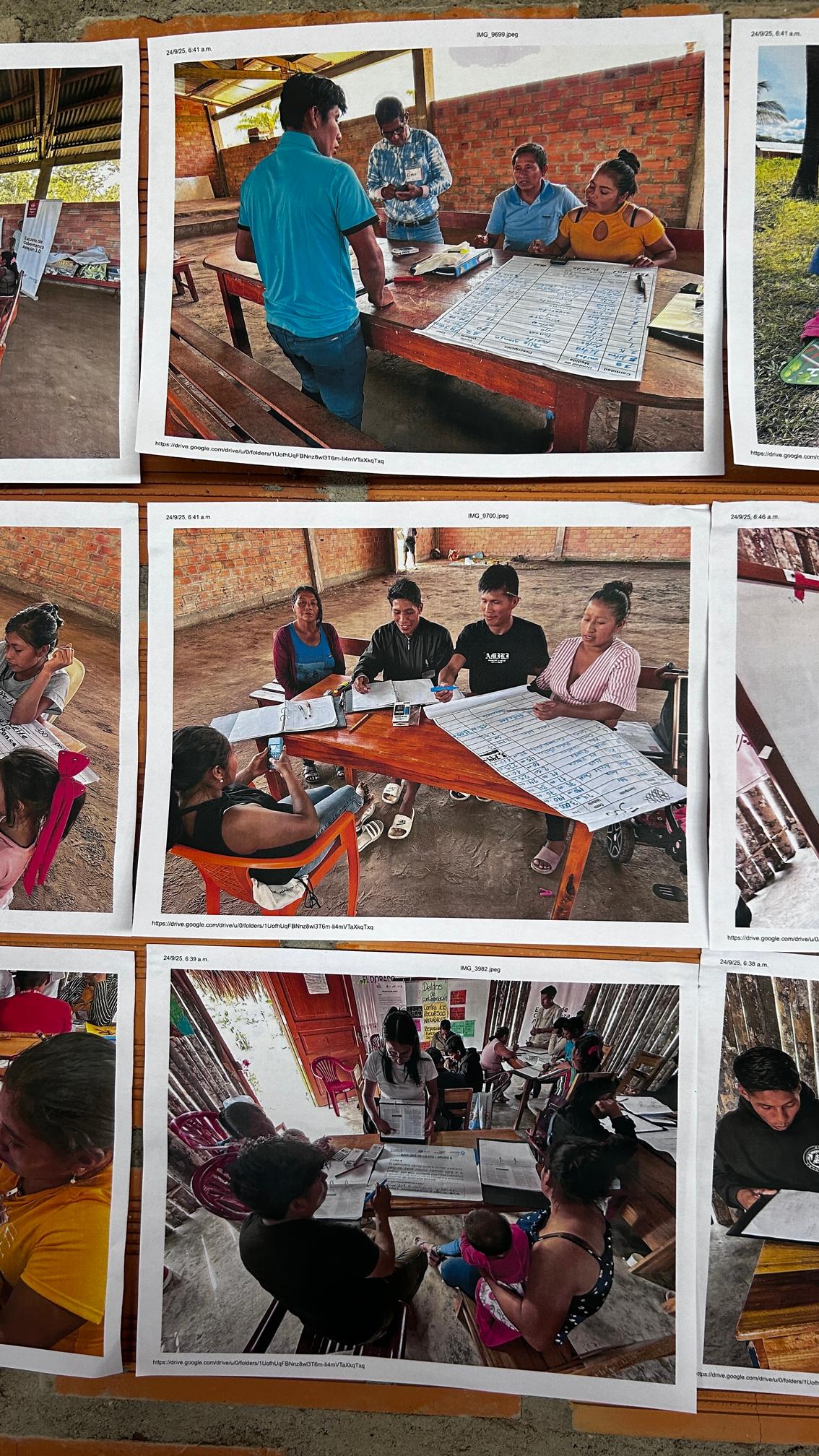
A Model That Consolidates Indigenous Learning and Leadership
The 2026 edition reaffirms the commitment of the Awajún Governance School to a flexible, intercultural, and territorial training model that recognizes the diversity of contexts and draws on accumulated learning. It has become a key space to strengthen local capacities, promote participation, and contribute to the Awajún buen vivir (good living) in the Alto Mayo, especially for women- more than 65% of the graduates have been women. This edition is tailored for nine awajun communities: El Dorado, Shimpiyacu, Alto Naranjillo, Tiwiyacu, Kusú, Cachiyacu, Morroyacu, Yarau, and Achu.